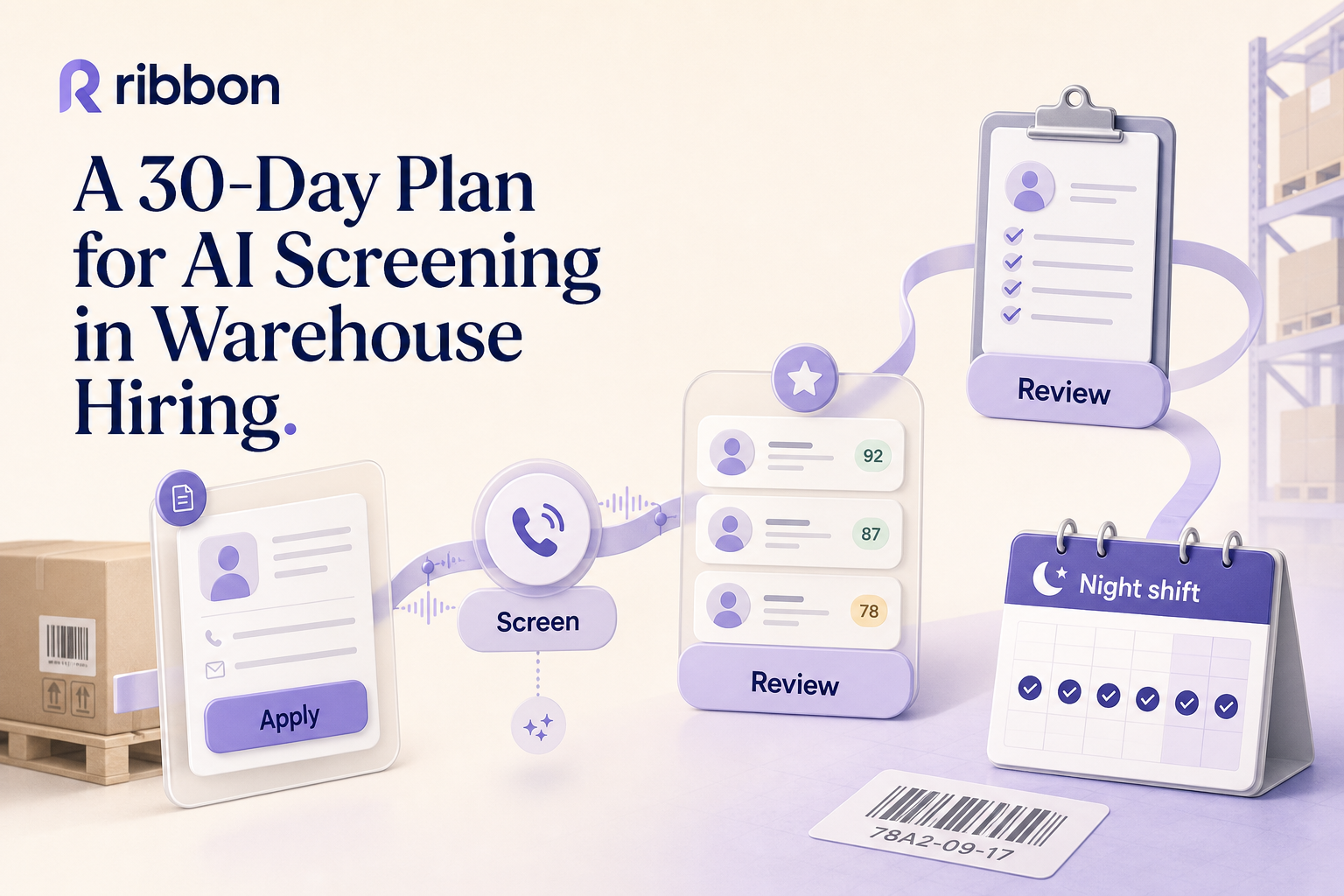
Warehouse hiring pilots fail when teams try to automate everything on day one. This plan keeps the scope tight, the scorecard usable, and the ATS handoff easy for supervisors to trust.
Lorem ipsum dolor sit amet, consectetur adipiscing elit, sed do eiusmod tempor incididunt ut labore et dolore magna aliqua. Ut enim ad minim veniam, quis nostrud exercitation ullamco laboris nisi ut aliquip ex ea commodo consequat. Duis aute irure dolor in reprehenderit in voluptate velit esse cillum dolore eu fugiat nulla pariatur.
Block quote
Ordered list
Unordered list
Bold text
Emphasis
Superscript
Subscript
Warehouse hiring gets messy after 5 p.m. That is when second-shift applicants apply, supervisors stop checking email, and the backlog starts growing. By the next morning, your team is already behind.
That is why warehouse teams are a good fit for an AI screening workflow. The candidate need is urgent, the roles are repeatable, and the first screen usually asks the same things: Can this person work the shift? Can they handle the pace? Will they show up? Ribbon already frames the value around 24/7 screening, fewer no-shows, and faster hiring for warehouse roles. The mistake is not the tool choice. The mistake is trying to roll it out everywhere at once.
If you want a pilot that survives contact with real operations, keep it narrow. One role family. One or two sites. One scorecard your floor leaders will actually read. In thirty days, you should know whether AI screening is helping you move faster without creating a second workflow to babysit.
The first week is about scope control. Pick a role where volume is high and the first conversation is predictable, like warehouse associate, picker-packer, forklift operator, or shipping clerk. Then narrow again. Do not start with every warehouse or every shift.
A better pilot looks like this:
This matters because your first month is not about proving that AI can do everything. It is about proving that it can remove calendar lag at the top of the funnel. Ribbon's ATS flows already center on that model: connect the ATS, choose the jobs or stages that should trigger an interview, invite candidates automatically, then sync the result back to the candidate record with the summary, transcript, scores, and recording link. That keeps the pilot inside the system your team already uses instead of creating a side spreadsheet nobody updates.
Before you launch, write down the exact questions the first screen needs to answer. For most warehouse roles, that list is plain operational stuff:
If a question will not change a hiring decision, cut it. Warehouse pilots break when the interview becomes a general-purpose conversation instead of a fast operational filter.
Week two is where a lot of teams drift. They spend time on prompt wording and forget the real handoff. Your supervisors are not asking for a clever transcript. They want enough signal to decide who deserves the next conversation.
That means every completed screen should return the same review packet:
Ribbon returns structured notes, transcripts, scores, and recording links so reviewers do not need to log into a separate dashboard just to understand the first screen. In practice, that only helps if your rubric is short enough to use.
For a warehouse pilot, I would keep the rubric to four lines:
You can add a role-specific line for forklift certification, cold-storage comfort, or safety process awareness when the job demands it. But keep the first pilot simple. If every site asks for its own custom scoring logic in week one, you are not running a pilot anymore. You are running a product committee.
Once the handoff looks good, most teams want to widen the funnel. Resist that urge for a week. The better move is to tighten the operating rules before candidate volume hides the weak spots.
Three guardrails matter most.
First, candidate transparency. Ribbon supports required consent text before a candidate continues. Use it. State that the interview is recorded, explain what the team reviews, and make sure the process matches your internal hiring policy.
Second, human review. Warehouse hiring moves fast, but you still need a person making the next-step call. The right operating model is still the same: let automation handle the first screen, then push a structured note back to the candidate record for human review. Keep that boundary clear inside the pilot.
Third, integrity checks. If your team worries that remote screening makes it easier to game the process, build that into the review plan from day one. Ribbon's integrity monitor is designed to flag answers that look overly scripted, AI-assisted, or coached so recruiters can review with more context. That is useful in warehouse hiring because you do not need every candidate investigated. You need a fast way to spot the small set that deserves a closer look.
This is also the week to decide where multilingual coverage matters. Ribbon's live product says candidates can complete interviews on any phone and in 10 languages, which is a practical advantage for warehouse teams hiring across mixed-language applicant pools and off-hours windows.
By week four, you should have enough interview volume to judge the pilot honestly. Most teams overfocus on completion rate. It matters, but it is not enough.
Track five numbers instead:
You also need one qualitative check: do supervisors trust the packet? Ask them two blunt questions. Did the summary save time? Did the transcript or recording ever change your mind? If the answer to both is no, the pilot may still be useful, but your review output is probably too noisy.
This is where a lot of warehouse teams learn the real lesson. The win is not just faster screening. It is faster screening that arrives in a format managers will use while the candidate is still warm. Ribbon's own customer stories keep circling that point: less calendar drag, faster review, and more time spent on the candidates worth a real conversation.
A good pilot ends with a hard decision, not a vague sense that the tool felt promising.
At day 30, decide whether you have enough evidence to expand to another role, site, or shift. I would only widen the rollout if four things are true:
If one of those is still shaky, do not scale the mess. Fix the trigger stage, shorten the rubric, rewrite the consent copy, or tighten the follow-up process. Then run another two weeks.
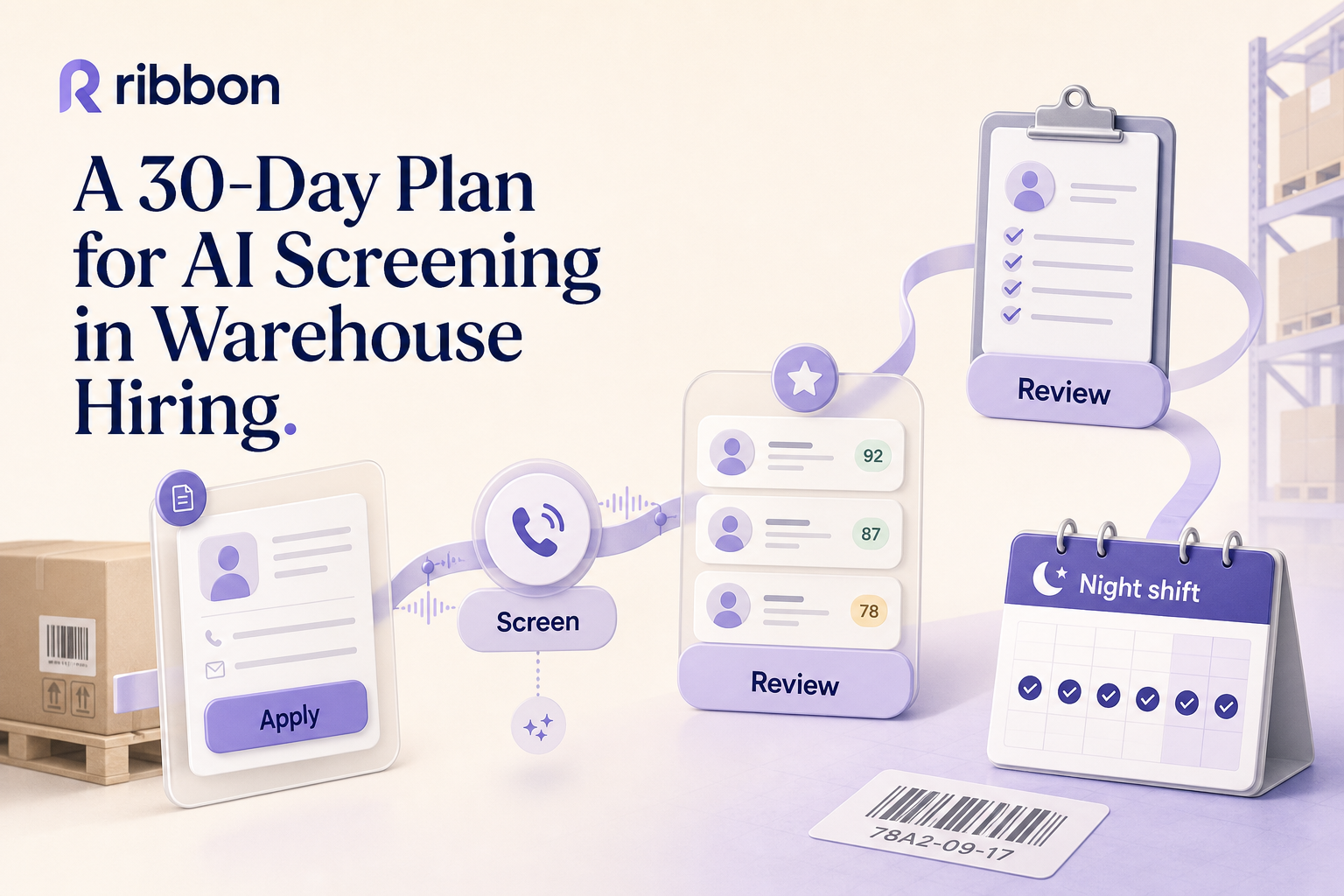
Warehouse hiring rarely needs a grand transformation story. It needs fewer delays between apply, screen, and review. If your pilot can do that cleanly, the expansion path becomes obvious.
Natural-sounding AI interviews that candidates actually enjoy
Instant feedback and scoring for every candidate
24/7 availability. Never lose a candidate to scheduling delays

"Ribbon AI reduced our time-to-hire by 60% while improving candidate experience."
- Sarah M., Head of Talent
See why teams are switching to smarter hiring.
7-day free trial • Cancel anytime


