Small teams do not need another hiring tool that creates a second workflow to manage. This guide compares screening approaches and shows what lean operators should demand before they pilot AI candidate screening.
Lorem ipsum dolor sit amet, consectetur adipiscing elit, sed do eiusmod tempor incididunt ut labore et dolore magna aliqua. Ut enim ad minim veniam, quis nostrud exercitation ullamco laboris nisi ut aliquip ex ea commodo consequat. Duis aute irure dolor in reprehenderit in voluptate velit esse cillum dolore eu fugiat nulla pariatur.
Block quote
Ordered list
Unordered list
Bold text
Emphasis
Superscript
Subscript
If you are a founder, COO, or first People hire, the real bottleneck usually shows up before the onsite: too many resumes, too many short intro calls, and no one with enough uninterrupted time to run a clean first screen.
That is why small teams start looking at AI screening. The market is crowded, though, and the demos blur together fast. Some tools automate resume review. Some ask for one-way video answers. Some run live, conversational interviews and hand back a review package your hiring team can actually use.
Those are not the same product. If you are evaluating AI screening for startups, the distinction matters more than any feature checklist.
Resume review feels cheap because the software is familiar and the workflow looks simple. In practice, it burns the exact resource a startup cannot spare: focused operator time.
Once inbound volume picks up, someone has to read every application, interpret inconsistent resumes, chase missing details, schedule screens, and summarize what they heard for the next interviewer. That can be a recruiter, but at many startups it is a founder, a functional leader, or one People generalist covering everything at once.
The first trap is assuming a better filter will fix the problem. Better ranking helps, but it still leaves the team doing manual outreach and first-round conversations.
What lean teams actually need is a way to get candidate signal early, in a format that a busy hiring manager can review quickly, without building a parallel recruiting operation.
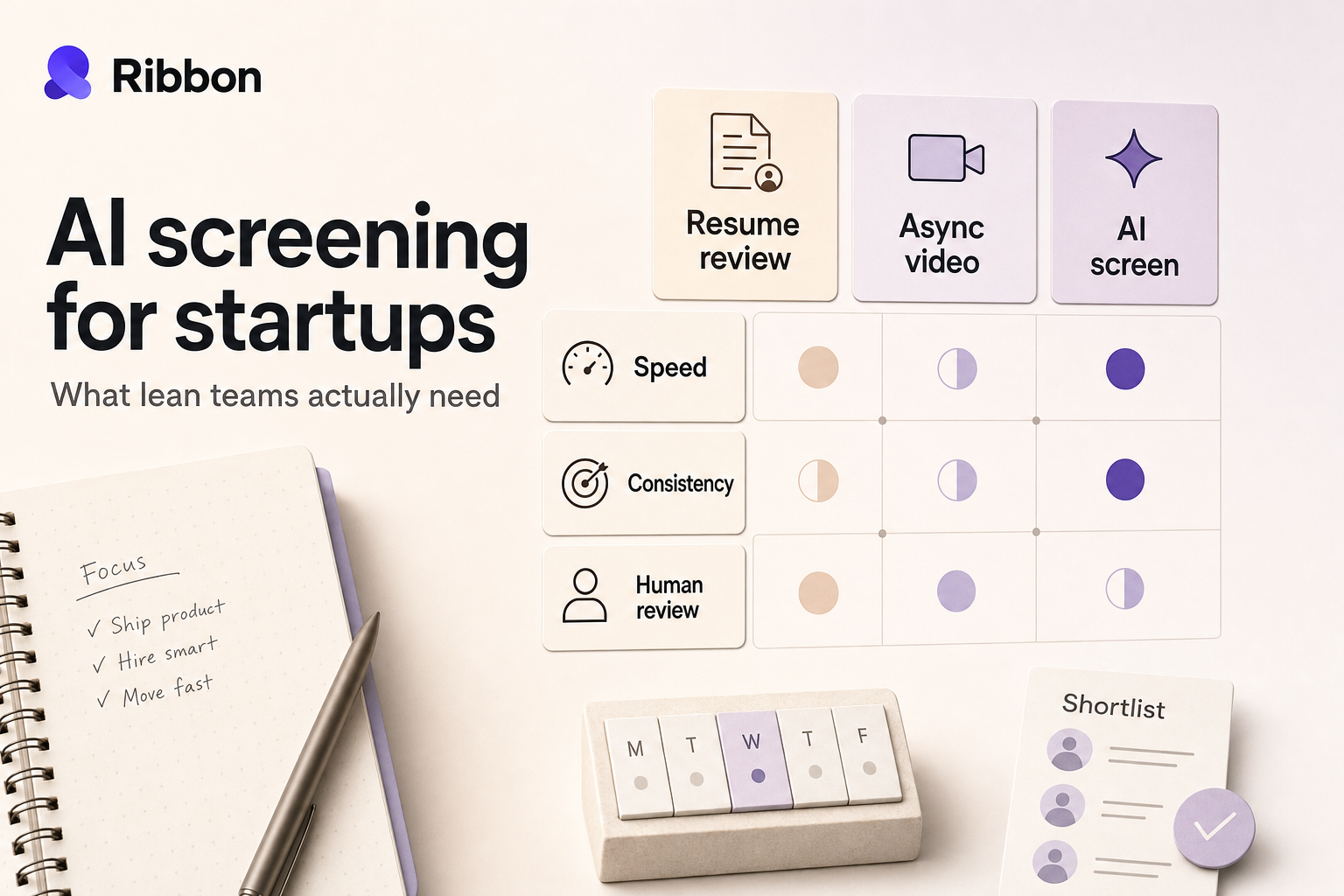
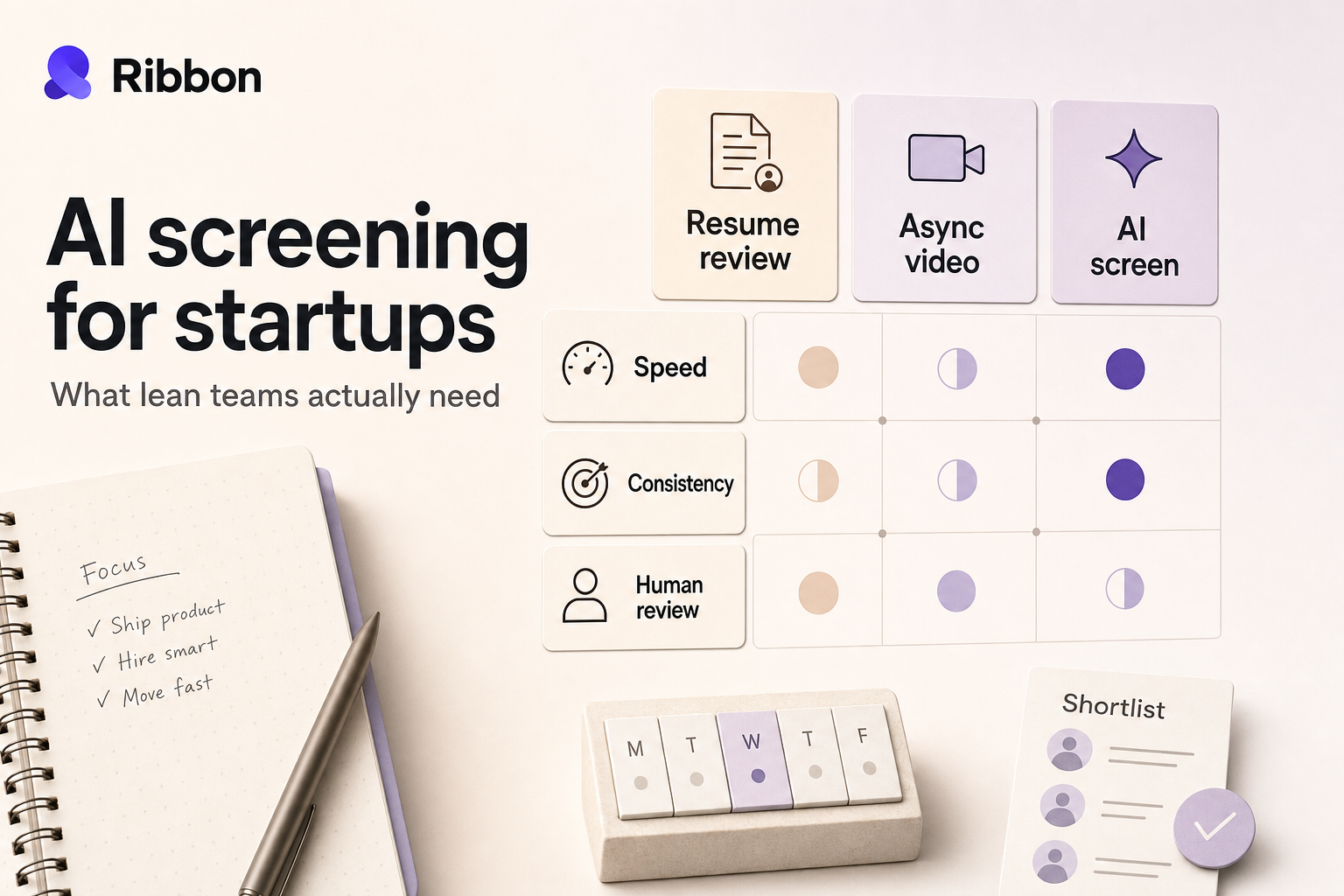
Most evaluations come down to three options.
This is the lightest operational change. It helps sort volume, but it still depends on humans to do the real screening. You save some triage time, not the whole top-of-funnel workload.
This can reduce scheduling friction, but it often creates a stiffer candidate experience and pushes review work back onto the team. Someone still has to watch clips, skim answers, and normalize inconsistent responses.
This is the category worth a closer look for startups that need real capacity. A live AI interview can probe follow-up questions, collect structured evidence, and give the team something richer than a pile of resumes or recorded snippets.
That does not mean every conversational product is strong. Some feel robotic. Some create a new dashboard your team has to babysit. The right benchmark is simple: after the candidate finishes, can a decision-maker review the result in a few minutes and know whether to move forward?
This is where a lot of startup buyers get distracted by flashy demos. Do not start with the interview itself. Start with the output.
A useful screening system should return a package that is easy to pass around internally:
That stack matters because startups rarely have layers of recruiting review. One operator needs to turn raw interview data into an informed yes, no, or maybe. In Ribbon's current product surface, the live app and API models include transcript data, summaries, recordings, follow-up questions, candidate questions, and scoring fields.
I would also look for export and sharing paths. If the only way to review results is to log into a new tool and click around, the product will lose internal momentum fast.
Early-stage teams sometimes assume they can worry about integration later.
The question is not whether you need a giant enterprise rollout. The question is whether the screening layer fits the system your team already uses to move candidates forward. That usually means some combination of ATS syncing, interview links tied to the right role, consistent status handoff, and recruiter follow-up that happens without manual chasing.
Ribbon's current public product pages frame this well. The platform positions ATS integrations and custom mapping as part of the core product, not an afterthought. It also emphasizes automatic candidate follow-up and keeping interview outputs where the team already works.
There is a second, more advanced angle here. If your team wants AI clients like ChatGPT or Claude to answer live recruiting questions, check whether the vendor exposes read access cleanly and permissionably. Ribbon's current MCP flow is built around OAuth consent and read access to jobs, applications, candidates, interviews, offers, and ATS users. That is useful for analysis, but it is not the same thing as promising broad write-back automation everywhere.
Startup teams sometimes treat candidate experience as a branding nice-to-have. It is more operational than that. If the first screen is awkward, confusing, or obviously rigid, completion rates fall and stronger candidates opt out.
The better standard is whether the interview feels like a real interaction. Ribbon's public site puts this plainly on its sourcing pages: the interview should adapt in real time, work on any phone, and support follow-up questions that actually make sense. Ask the vendor to show how the interview handles clarifying answers, incomplete responses, and messy real-world candidate behavior.
Candidate flexibility matters just as much. A 24/7 screening window helps only if the review package comes back quickly enough for the human team to act while the candidate is still warm.
A good startup workflow does not remove judgment. It moves judgment to the right place.
Humans should still define the rubric, decide which roles deserve automation first, review edge cases, and make the final call on shortlist and disposition. They should also keep control over consent language and recording access.
This is another place where the product details matter. Ribbon's current settings models include configurable consent text, enforcement controls, desktop requirements, resume or document upload requirements, and webhook settings. The API surface also includes a route to revoke access to interview recordings.
If a vendor talks about full autonomy but gets vague when you ask about permissions, review paths, or recording access, that is your answer.
Do not try to redesign your whole recruiting motion in week one. Pick one or two roles with enough inbound volume to expose the pain clearly. Agree on a short rubric. Decide what a manager will review after each interview. Then measure a few things that matter:
That last point is easy to ignore and hard to fix later. If the pilot creates extra admin work, your startup did not buy capacity. It bought a new chore.
The teams that get value early usually stay disciplined about scope. Start narrow and expand only once managers trust the evidence coming back.
If you want a real example of a lean team using this approach, Ribbon's Opencare case study is worth reading. The core lesson is not "buy more AI." It is "protect recruiter time, keep the review package useful, and keep the process human."
No, but they do need an operating system for review and follow-up. If there is no ATS yet, be honest about how summaries, recordings, and decisions will be shared. If an ATS exists, integration fit should move up the priority list quickly.
No. Resume filtering is useful when volume is high and roles are straightforward. It becomes less useful when the real bottleneck is the human time required to run first screens.
In most cases, a short summary, a consistent scorecard, and access to transcript or recording detail when needed. If managers have to sit through every interview from scratch, the workflow is still too heavy.
Lean teams do not need more software that claims to save time while quietly adding review work somewhere else. They need a screening layer that creates usable evidence, fits the ATS or workflow they already run, and keeps humans in control of the decisions that matter.
That is the standard I would use for any AI screening demo. If the product can give your team better first-round signal without creating a side process, it is worth a pilot. If it cannot, the startup probably needs a sharper workflow, not another tool.
Natural-sounding AI interviews that candidates actually enjoy
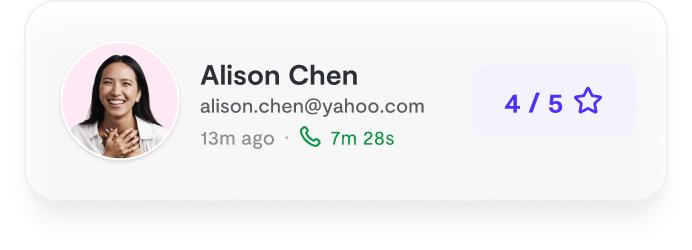
Instant feedback and scoring for every candidate
24/7 availability. Never lose a candidate to scheduling delays

"Ribbon AI reduced our time-to-hire by 60% while improving candidate experience."
- Sarah M., Head of Talent
See why teams are switching to smarter hiring.
7-day free trial • Cancel anytime


